
Before the river
One point forward only
RULE GUIDE · SOLDIER
Forward only, until it crosses the river
A soldier moves one point forward before crossing the river. After crossing, it may also move one point sideways. It can never move backwards, and it captures the same way it moves.
Practise on a real board→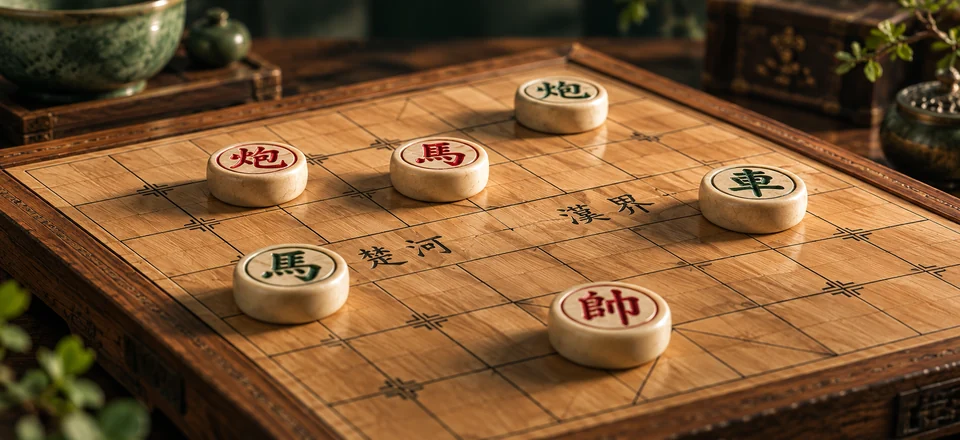
One point forward only
Forward or sideways
Never moves backwards
Soldiers start on the player’s back rank and advance towards the river. Until they cross it, they may only move one point forward.
Once across, a soldier also gains sideways moves. That extra option makes a crossed soldier far more dangerous, and it is one of the classic transformations in xiangqi.
A soldier captures exactly the way it moves: step one point onto the enemy piece. No screen and no special condition is required.
It cannot capture diagonally and it cannot jump. Its threat is always limited to the points it can legally step onto.
Although worth the least, soldiers often decide endgames. A soldier that reaches the enemy palace area restricts the general and combines with chariots and cannons to force mate.
Soldiers left at home or traded too early reduce your attacking options later, so their advance is a genuine strategic decision.
FAQ
No. Soldiers can never move backwards, under any circumstances.
No. After crossing it may move forward or sideways, but there are still no diagonal moves.
Yes, once it has crossed the river; that sideways step is also how it captures horizontally.
A single soldier is the cheapest piece, but crossed soldiers are decisive in many endgames.
Updated
Ready to make the first move?
Practise on a real board