
Movement
One straight, one diagonal
RULE GUIDE · HORSE
An L-shaped move that a single piece can block
The horse moves one point straight and then one point diagonally, like the letter L. If the point directly next to it in the straight direction is occupied, the move is illegal — this is the famous blocked horse leg.
Practise on a real board→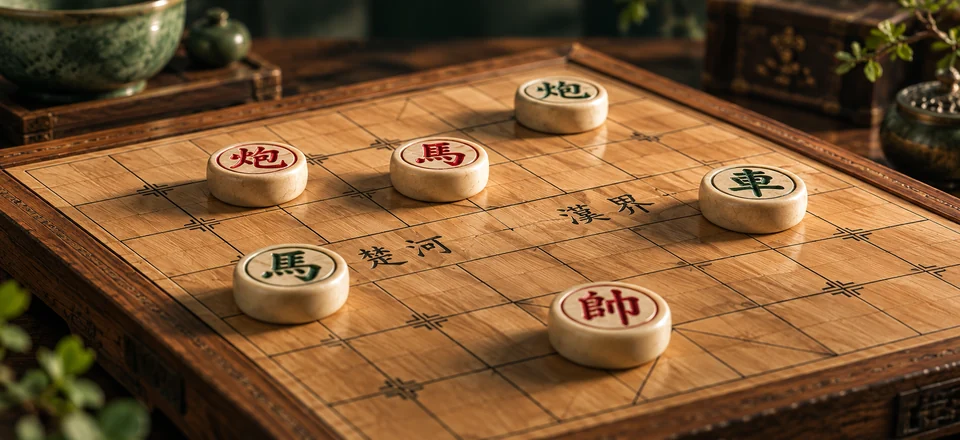
One straight, one diagonal
A blocked leg cancels the move
It can jump over other pieces
Think of the horse move in two steps: go one point up, down, left or right, then one point diagonally outwards from that square. The destination is where the horse lands.
Because the shape is an L, a horse has up to eight destinations from a central point, and fewer near the edges of the board.
The horse leg is the first, straight step. If any piece stands on that point — yours or your opponent’s — the horse cannot move in that direction at all.
Only that first point matters. Pieces on the diagonal part of the move do not block the horse, which is why a horse really can jump over a wall of pieces.
Horses grow stronger as the board empties, because fewer pieces can block a leg. In the opening they need open points to jump to, otherwise soldiers and elephants restrict them.
A horse near the enemy palace is dangerous: it checks the general while covering escape points, and combines well with a chariot or cannon.
FAQ
Yes, the horse jumps — but only if its straight-ahead leg point is empty. A blocked leg makes the move illegal.
No. Only the first straight point blocks it; pieces on the diagonal never do.
Usually the cannon is slightly stronger in the middlegame, but on an open board the horse catches up quickly.
No. A blocked leg makes the move illegal whether or not it would capture.
Updated
Ready to make the first move?
Practise on a real board